
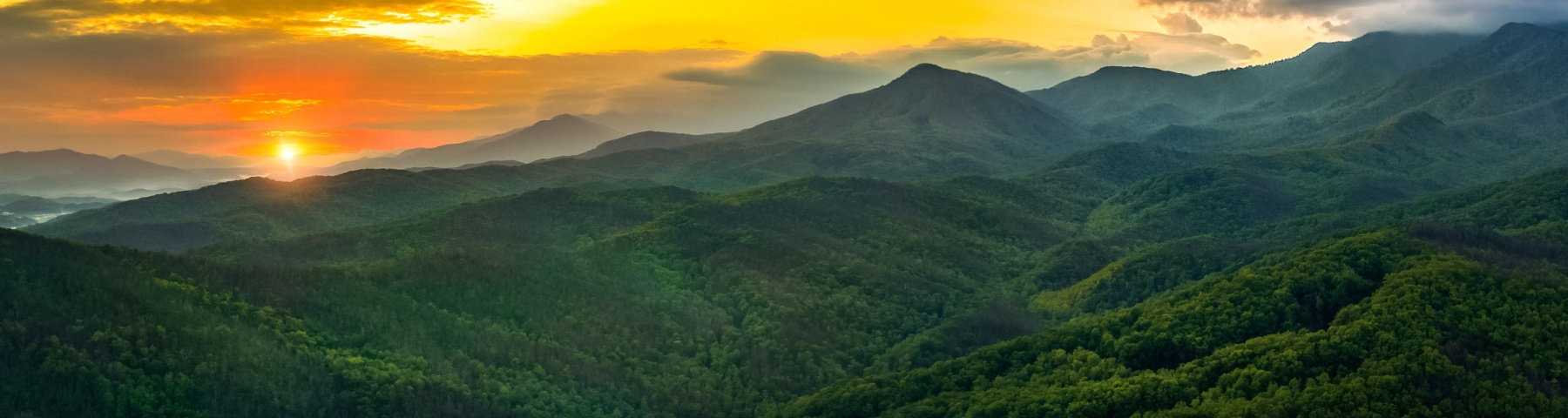
When spring arrives in the Great Smoky Mountains, nature orchestrates one of the most spectacular transformations in North America. From cascading wildflower displays to rushing waterfalls fed by spring rains, spring in the Smokies offers an unforgettable experience that draws millions of visitors each year to witness this annual rebirth.
Great Smoky Mountains National Park, America's most visited national park with over 12.2 million visitors in 2024, becomes a living canvas during spring months. The park's reputation as "Wildflower National Park" is well-earned, boasting more than 1,500 species of flowering plants—more than any other national park in the United States. This remarkable biodiversity, combined with stunning waterfalls and scenic mountain vistas, makes spring the ideal season to explore this UNESCO World Heritage Site. Start planning your trip and stay at Smoky Mountain Holiday and watch spring bloom.
Why Spring is Prime Time in the Smoky Mountains
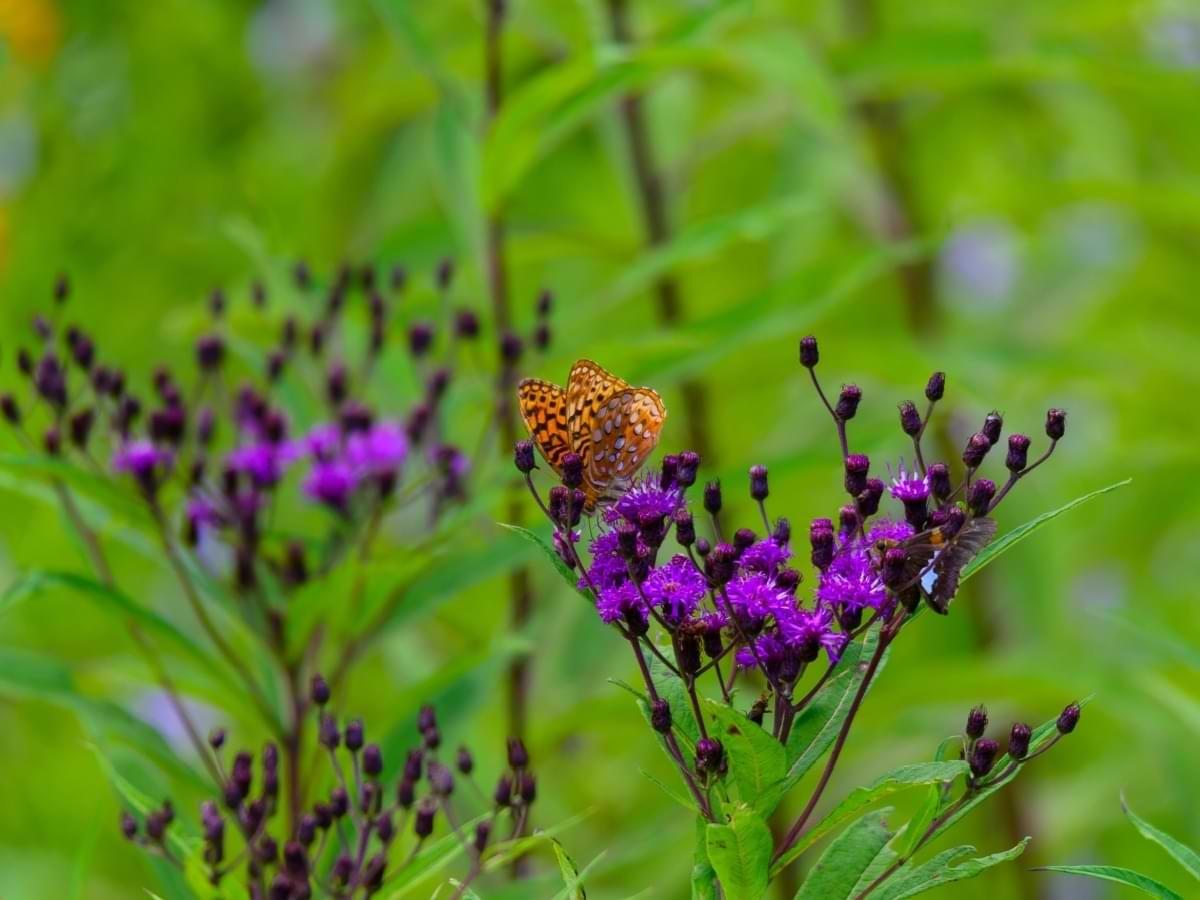
The spring season in the Smokies typically spans from March through May, with each month offering distinct experiences. March brings the earliest ephemerals pushing through winter's remnants, while April showcases peak wildflower blooms, and May transitions the mountains into lush summer greenery.
Weather during spring remains comfortably mild, with average temperatures ranging from highs of 62°F in March to 77°F in May at lower elevations. However, the mountains' varying elevations create microclimates that can differ by 10-20 degrees, meaning hikers might experience spring-like conditions at valley floors while encountering late-season snow at higher peaks.
Spring's moderate temperatures make hiking considerably more pleasant than summer's heat and humidity. The cool mornings and comfortable afternoons provide ideal conditions for exploring the park's 800+ miles of trails without the oppressive 90-degree heat that characterizes summer months. Additionally, spring crowds, while significant, remain more manageable than the peak summer season and fall foliage periods.
The Wildflower Spectacle: Nature's Most Colorful Show
Understanding the Spring Wildflower Bloom
The Great Smoky Mountains' wildflower display operates on a fascinating elevation-driven timeline. Lower elevation blooms begin in late February, with the procession marching steadily upward as temperatures warm, reaching the highest peaks by June. This extended blooming window means visitors can witness vibrant floral displays throughout an extended spring season.
Peak wildflower season typically occurs in mid-to-late April, when spring ephemerals—plants that bloom briefly before the forest canopy leafs out—make their stunning appearance. These specialized plants have evolved to complete their entire life cycle in the narrow window of sunlight that reaches the forest floor before the tree canopy blocks it out. Once deciduous trees fully leaf, many ephemeral wildflowers disappear until the following spring.
The park's 1,500+ flowering plant species include approximately 1,200 wildflowers, representing 80% of all flowering plants in the Smokies. This extraordinary diversity stems from the region's varied topography, abundant rainfall (some areas receive over 80 inches annually), and range of elevations from 875 feet to 6,643 feet at Kuwohi (formerly Clingmans Dome).
Iconic Wildflower Species to Discover
Trillium
The Smokies host 10 different species of trillium, making these three-petaled beauties one of the park's most iconic spring flowers. White trillium, yellow trillium, painted trillium, and Catesby's trillium carpet forest floors from April through May, their distinctive three-leaf arrangement making them easy to identify. Large colonies of white trillium create snow-like blankets beneath hardwood canopies, particularly spectacular along trails like Porters Creek.
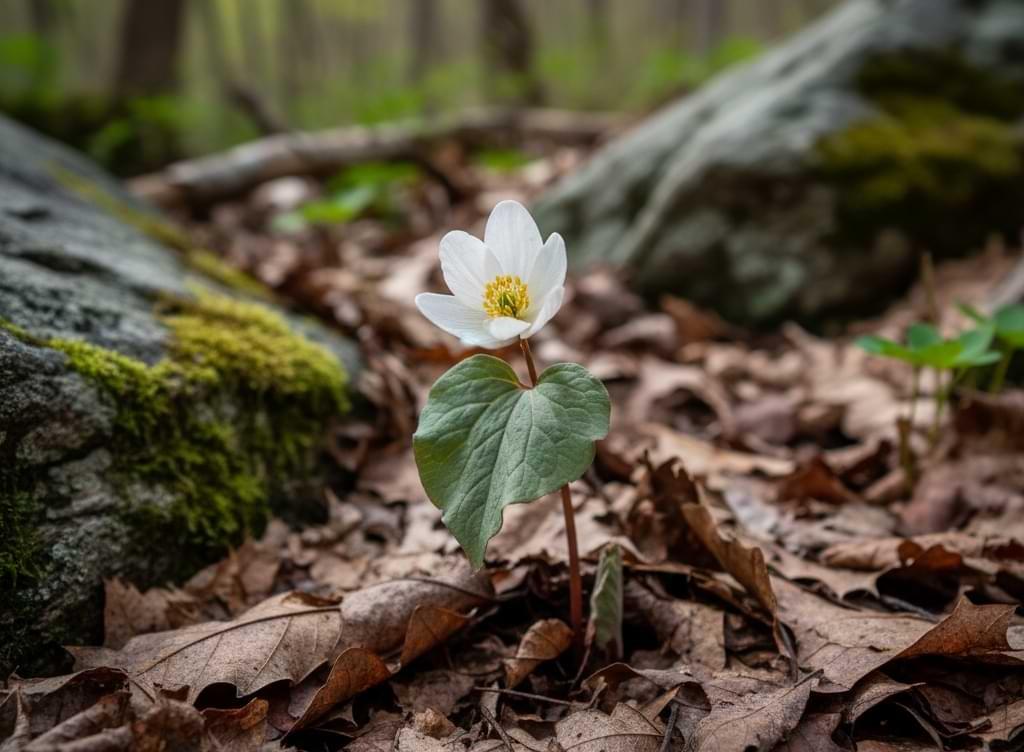
Bloodroot
Blooming in late March to early April, bloodroot's delicate white petals with golden stamens last only briefly, making them a cherished early-spring sighting. The plant earns its name from the orange-red sap coloring its roots. Bloodroot thrives at lower elevations and can be spotted along Chestnut Top Trail and Porters Creek Trail.
Spring Beauty
These diminutive flowers—only 3-4 inches tall—feature five white or pale pink petals with distinctive pink stripes. Despite their small size, spring beauties often grow in massive colonies that transform forest floors into delicate carpets of color. They typically bloom in early April across wide areas of the park.
White Fringed Phacelia
Perhaps the most dramatic wildflower display in the Smokies, white fringed phacelia blooms in dense colonies that blanket hillsides in mid to high elevations. The Porters Creek area in Greenbrier is legendary for its phacelia displays, with white flowers creating what appears to be a late-season snowfall across the landscape. These blooms typically peak in late April.
Dwarf Crested Iris
Standing only 4 inches tall, these striking flowers feature blue-purple petals with distinctive yellow crests. Large colonies proliferate along the Bud Ogle Nature Trail and throughout the park at mid to low elevations, blooming in April.
Flame Azalea
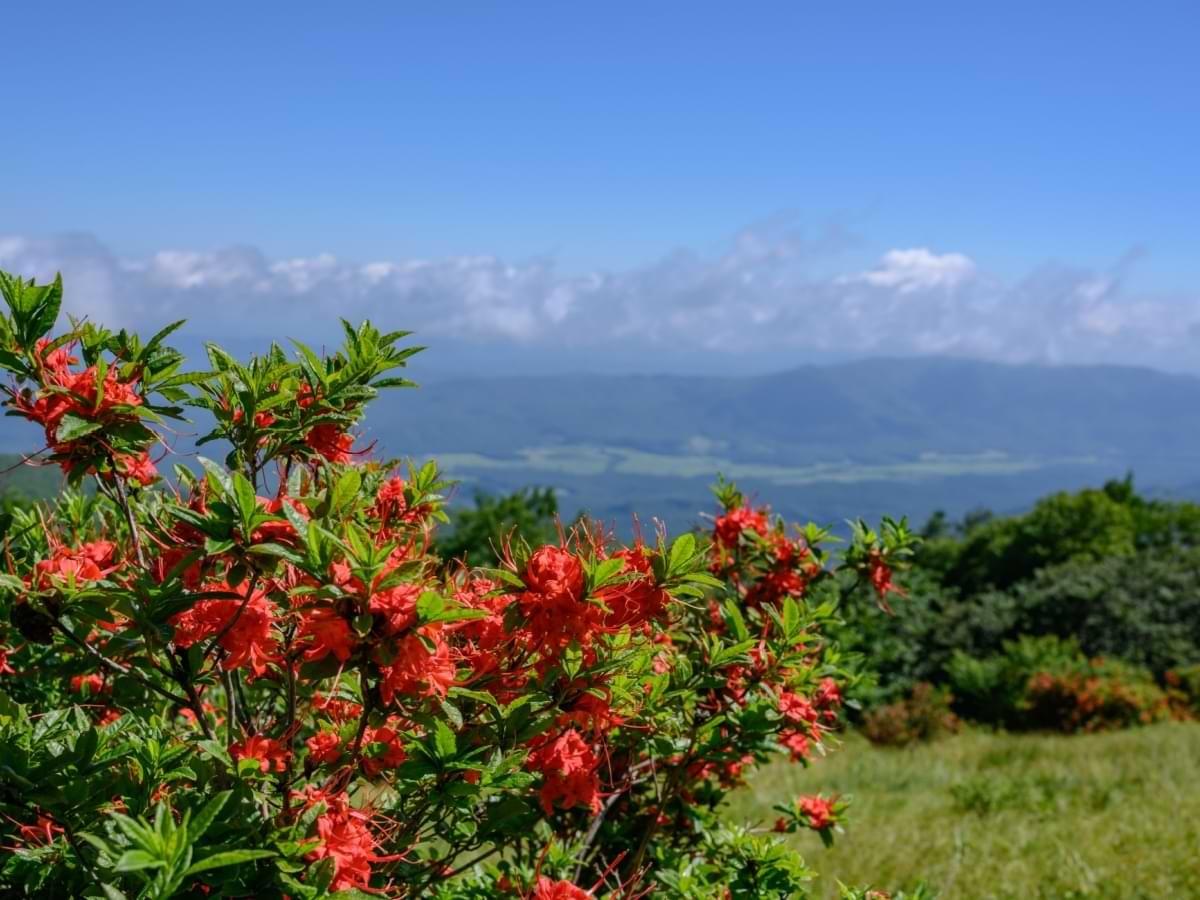
While technically a flowering shrub rather than a wildflower, flame azalea provides some of the most spectacular color in the Smokies. These deciduous shrubs produce clusters of vibrant red, orange, or yellow flowers from April at lower elevations through June at high elevations. Gregory Bald and Andrews Bald are renowned for their impressive azalea displays.
Best Trails for Wildflower Viewing
Porters Creek Trail (Greenbrier Area)
Consistently ranked as the premier wildflower destination in the park, Porters Creek Trail delivers spectacular diversity and density of spring blooms. This 4-mile roundtrip hike showcases bloodroot, trillium, May apple, trout lily, dwarf ginseng, violets, and the famous white fringed phacelia that blankets hillsides in late April. The trail's relatively easy terrain makes it accessible to most hikers, and the historic structures along the route add cultural interest to natural beauty.
Chestnut Top Trail
The first section of Chestnut Top Trail has earned legendary status among wildflower enthusiasts. This 8.6-mile roundtrip trail features incredible concentrations of spring blooms along its initial miles, including impressive displays of bloodroot, hepatica, spring beauty, and various trillium species. Early morning visits in late March through April offer the best viewing conditions before crowds arrive.
Cove Hardwood Nature Trail
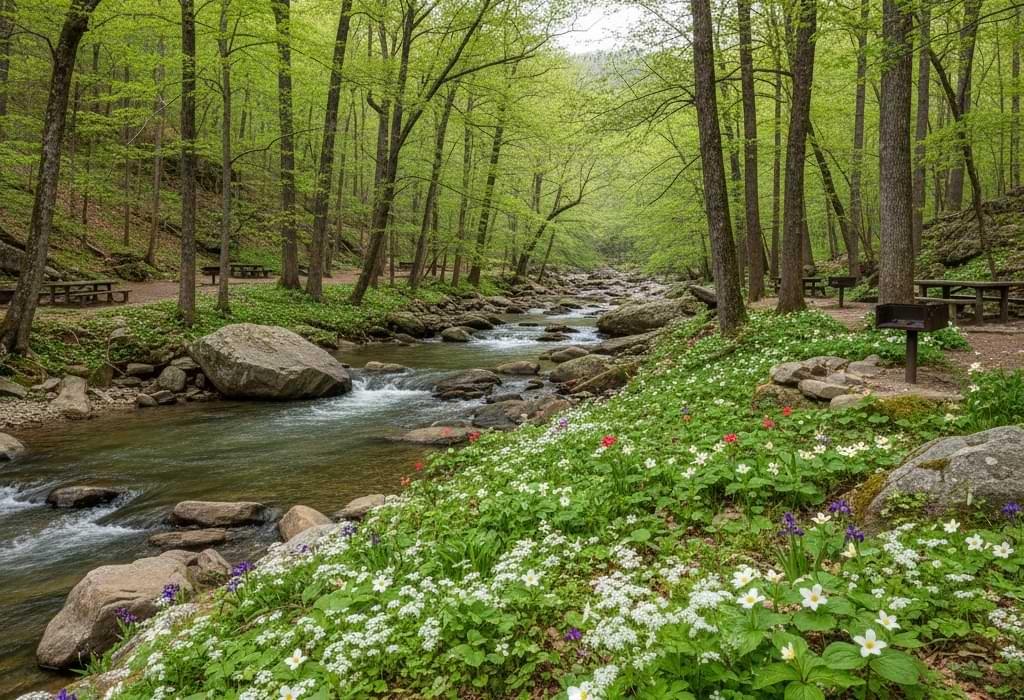
This three-quarter-mile loop trail at Chimneys Picnic Area offers some of the best spring wildflower viewing in the entire park. The short distance makes it perfect for families or those seeking an easy introduction to Smokies wildflowers. The trail's interpretive signs help visitors identify various species encountered along the route.
Little River Trail
Stretching from Elkmont, the Little River Trail combines riverside scenery with abundant wildflower viewing. The relatively flat terrain follows the Little River, offering continuous opportunities to spot spring blooms while enjoying the sound of rushing water. This 4.9-mile roundtrip hike provides excellent wildflower diversity with moderate effort.
Deep Creek Trail
Located on the North Carolina side near Bryson City, Deep Creek Trail offers excellent wildflower viewing combined with multiple waterfall destinations. The trail's varied habitats support diverse plant communities, and the area typically sees fewer crowds than Tennessee-side trails, providing a more peaceful wildflower experience.
Chasing Waterfalls: Spring's Liquid Beauty
Spring transforms the Smokies' waterfalls into thundering spectacles. Increased rainfall and snowmelt from higher elevations send massive volumes of water cascading down the mountains, creating the most dramatic waterfall displays of the year. The park's abundant precipitation—some areas receive over 80 inches annually—ensures waterfalls flow year-round, but spring volumes create truly impressive displays.
Laurel Falls
-8ED72C2A-4EDF-43C1-B9E7E2856108FF4A.jpg)
As the most photographed waterfall in the park, Laurel Falls attracts huge crowds, but its 80-foot two-tiered cascade justifies its popularity. The 2.6-mile roundtrip trail is paved, making it the easiest waterfall hike on the Tennessee side, though the path can be steep in sections and becomes broken and uneven in places. The trail's accessibility means parking lots fill rapidly—arrive before 7:30 AM to secure a spot.
The waterfall splits into upper and lower sections, with a walkway crossing the ledge between them, allowing visitors unique perspectives of both cascades. Blooming mountain laurel, the trail's namesake shrub, adds extra beauty in May. Note: Laurel Falls Trail is closed for rehabilitation through July 2026, providing an opportunity to explore the park's many alternative waterfall destinations.
Grotto Falls
Grotto Falls holds the distinction of being the only waterfall in Great Smoky Mountains National Park that visitors can walk behind. This unique feature makes the 2.6-mile roundtrip hike along Trillium Gap Trail exceptionally popular. The 25-foot waterfall may not be the tallest in the park, but the experience of standing behind the falling water creates unforgettable memories.
The trail offers flat, well-worn terrain considered easy for most hikers. Spring wildflower displays enhance the journey, and the waterfall's abundant salamander population provides additional wildlife interest. Access the trailhead via Roaring Fork Motor Nature Trail, arriving early to secure parking at this popular destination.
Rainbow Falls
Rainbow Falls stands as the tallest single-drop waterfall in the Smokies at 80 feet. The 5.4-mile roundtrip hike rates as moderate in difficulty, featuring rugged terrain that received major improvements between 2017-2019, including installation of 400 drainage elements and 350 steps. The waterfall earns its name from rainbows that appear in the mist on sunny days.
Hikers cross two footbridges before reaching the waterfall approximately 2.7 miles from the trailhead. In winter, the falls sometimes freeze into spectacular ice formations, offering a completely different but equally impressive display. Spring's high water volumes create the most powerful flow, making this season ideal for dramatic photographs.
Abrams Falls
Despite standing only 25 feet tall, Abrams Falls impresses with the enormous volume of water rushing over its edge—the most impressive flow of any waterfall in the park. The 5.2-mile roundtrip hike from Cades Cove rates as moderate in difficulty, following Abrams Creek through forests of pine, oak, hemlock, and rhododendron.
Spring wildflowers line the trail, adding color to the journey. The trailhead's location off the Cades Cove Loop means visitors can combine waterfall hiking with wildlife viewing and historic structure exploration in a single day. The trail sees heavy use, so early morning starts provide the best experience.
Deep Creek Waterfalls
The Deep Creek area on the North Carolina side offers a unique three-waterfall experience: Tom Branch Falls, Indian Creek Falls, and Juney Whank Falls. A two-mile hike accesses all three waterfalls, making this an efficient way to maximize waterfall viewing. The area also offers tubing opportunities in summer, though spring's cold water temperatures make this a future-season activity.
Waterfall Photography Tips
Spring's abundant water flow creates ideal conditions for waterfall photography, but the season also presents challenges. Overcast days or soft morning/evening light work best for capturing flowing water without harsh shadows or blown-out highlights. Use a tripod and slower shutter speeds (1/4 second to several seconds) to create the silky water effect characteristic of professional waterfall images.
Position yourself at various angles—straight-on shots capture the waterfall's power, while side angles can incorporate surrounding forest and spring wildflowers into compositions. Early morning visits before crowds arrive allow photographers freedom to work without constant foot traffic and provide softer light conditions.
Scenic Drives: Mountain Vistas from Your Vehicle
The Great Smoky Mountains' 384 miles of roads provide spectacular viewing opportunities for those unable or unwilling to hike. Most roads are paved and maintained for standard passenger vehicles, making scenic driving accessible to virtually all visitors. Spring's emerging greenery, blooming trees, and clearing skies following spring storms create ideal driving conditions.
Newfound Gap Road
As the only fully-paved road traversing the entire park, Newfound Gap Road (US Highway 441) represents the quintessential Smokies scenic drive. This 31.63-mile route connects Gatlinburg, Tennessee, to Cherokee, North Carolina, climbing more than 3,000 feet in elevation. The road remains open year-round unless extreme weather conditions force temporary closures.
Approximately 20 overlooks punctuate the route, each offering unique perspectives on the mountain landscape. Key stops include Campbell Overlook, Chimney Tops Overlook, Morton Overlook (famous for sunset photography), and Newfound Gap Overlook itself, where visitors can stand on the Tennessee-North Carolina state line. The 5,046-foot elevation at Newfound Gap creates noticeably cooler temperatures—up to 10 degrees lower than surrounding lowlands—making a light jacket advisable.
Spring travelers witness the elevation-driven progression of seasons, with valley floors showing full spring greenery while higher elevations display bare trees or early-spring foliage. This elevation diversity makes it possible to experience multiple seasons in a single drive, comparable to traveling from Georgia to Maine in terms of forest ecosystem changes.
Cades Cove Loop Road
The 11-mile one-way Cades Cove Loop encircles a lush valley renowned for both wildlife viewing and preserved historic structures. This circuit provides the best wildlife viewing opportunities in the park, with frequent sightings of white-tailed deer, black bears, wild turkeys, and other species. The open meadows and fields create visibility impossible in densely forested areas, making Cades Cove the top destination for spotting Smokies wildlife.
Historic structures including churches, cabins, barns, and a working gristmill line the route, providing glimpses into 19th-century Appalachian life. The John Oliver cabin, the oldest human structure in the park, marks one of the first settlements in Cades Cove. Several hiking trails, including the path to Abrams Falls, originate from the loop road.
The loop's popularity means traffic can move slowly, particularly on weekends and holidays when completing the circuit may take 3-5 hours. Arrive at the 8 AM opening or visit on Wednesday mornings from May through September, when the road closes to vehicles and opens exclusively to pedestrians and cyclists. These bike-only Wednesdays provide peaceful opportunities to explore at a leisurely pace without vehicle traffic.
Roaring Fork Motor Nature Trail
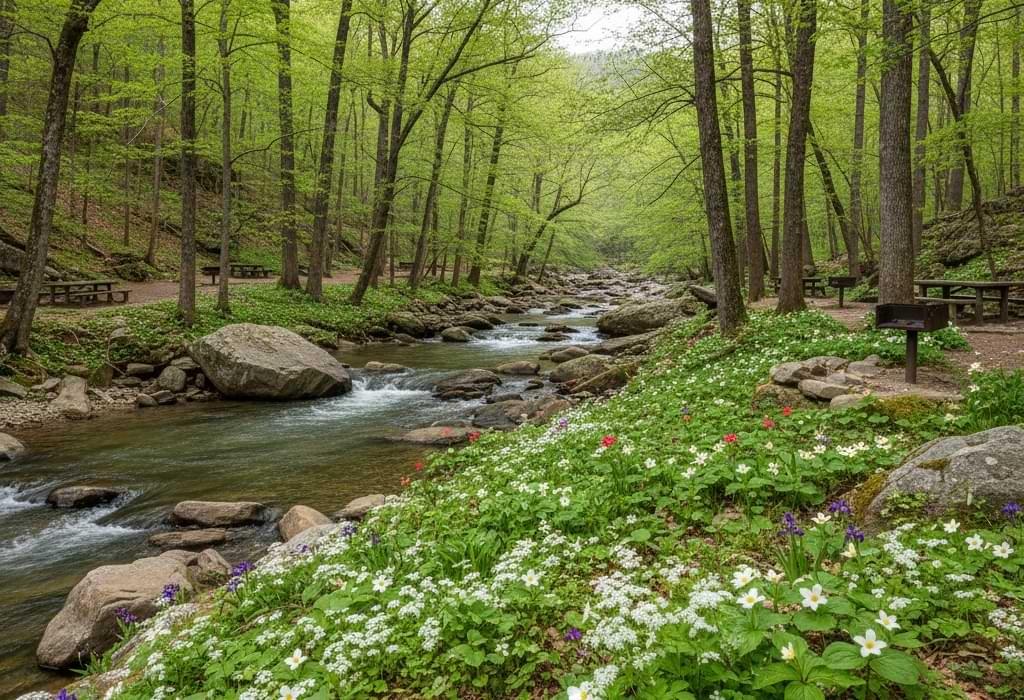
This 5.5-mile one-way loop just outside Gatlinburg offers an intimate forest experience quite different from Cades Cove's open valleys. The narrow, winding road traverses old-growth forests, passes rushing mountain streams, and provides access to historic cabins and the Noah "Bud" Ogle Nature Trail.
Trailheads along the route include Rainbow Falls Trail and Grotto Falls Trail, two of the park's most popular waterfall destinations. The "Place of a Thousand Drips"—not an official waterfall but rather water seeping down a rock face—appears toward the trail's end, most impressive after spring rains.
The motor trail operates seasonally from mid-April through November, closing during winter months. Buses, RVs, motor homes, and trailers are prohibited due to the road's narrow, winding nature. Early morning or late afternoon visits provide the best chances of spotting wildlife and avoiding the crowds that pack the route mid-day.
Little River Road
Stretching 30 miles between Sugarlands Visitor Center and Cades Cove, Little River Road follows its namesake river, providing continuous water views and numerous pull-offs for riverside appreciation. The route passes the Laurel Falls trailhead, the Sinks (a powerful waterfall visible from the roadside), Meigs Falls, and Metcalf Bottoms picnic area.
Spring's increased water flow makes the river particularly spectacular, with rapids, cascades, and pools creating endless photo opportunities. The drive requires approximately 1.5 hours one-way, though frequent stops to admire scenery typically extend total trip time.
Kuwohi (Clingmans Dome) Road
File name: clingmans_dome_kuwohi.jpg
Alt text: A snowy scene shows the curved concrete observation tower and ramp at Clingmans Dome rising above a frosted evergreen forest, with visitors walking up the path in winter weather.
This 7-mile spur road branches off Newfound Gap Road near its midpoint, ascending to the park's highest point at 6,643 feet. The road terminates at a parking area from which a steep half-mile paved trail leads to the iconic observation tower. From this vantage point, visitors enjoy 360-degree views stretching across seven states on clear days.
The high elevation creates a cool, damp spruce-fir forest ecosystem more typical of Canada than southern Appalachia. Spring arrives late at this elevation, with the road typically opening in early April after winter closure, though snow may persist through May at the highest elevations. The unique high-elevation environment makes this drive worth the effort despite potentially cool, misty conditions.
Wildlife Encounters: Spring Awakening in the Smokies
Spring breathes life back into the Smokies' wildlife populations. Black bears emerge from winter dens, white-tailed deer give birth to spotted fawns, and elk calves appear in Cataloochee Valley. This season of renewal provides some of the year's best opportunities for wildlife viewing, particularly for observing young animals before they mature and become more elusive.
Black Bears
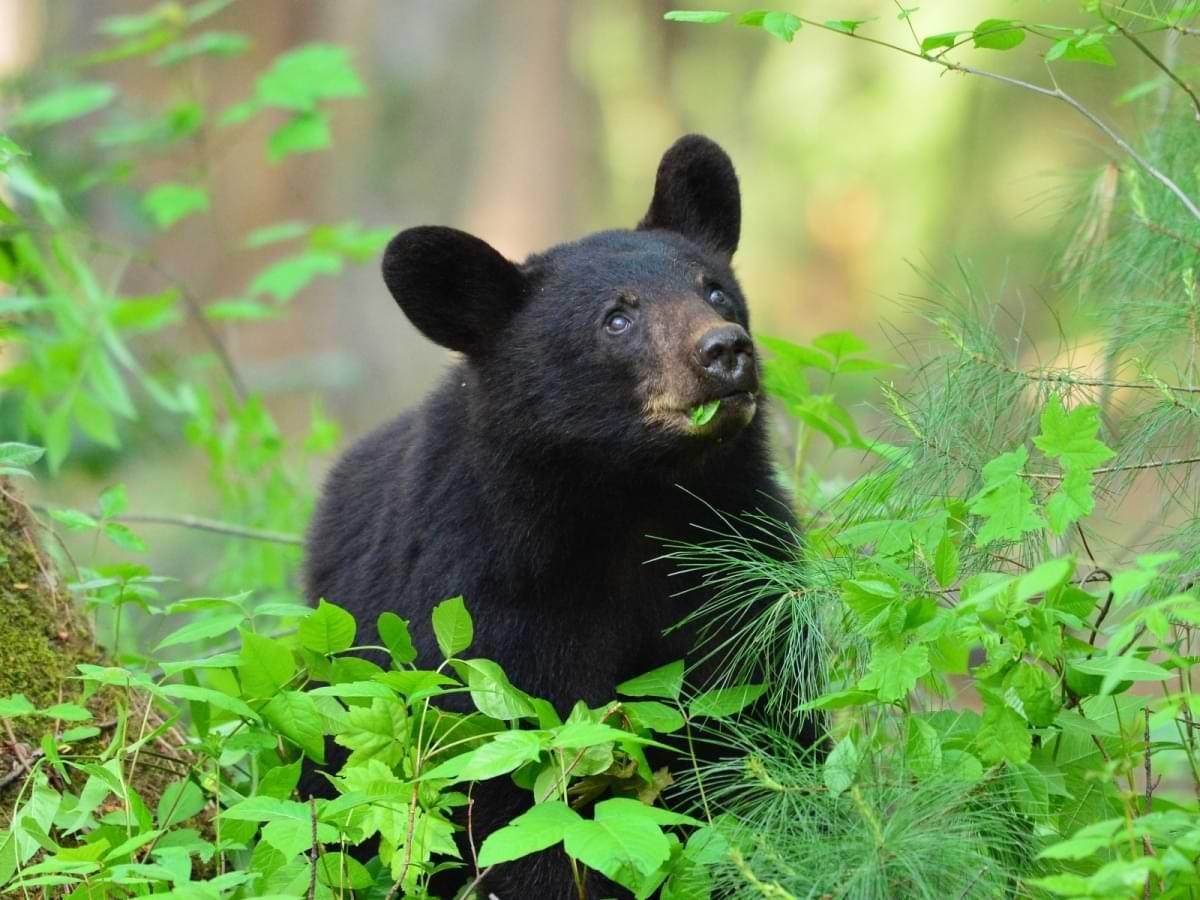
Great Smoky Mountains National Park provides the largest protected black bear habitat in the eastern United States, supporting approximately 1,500-1,600 bears—roughly two per square mile. Spring marks an especially active period for bears as they emerge from winter dens hungry and search intensively for food. Mother bears with new cubs become visible in late spring, though females with cubs show heightened protectiveness and require extra caution.
Cades Cove offers the best and safest black bear viewing opportunities, as the open valley allows observation from vehicles while maintaining the required 150-foot distance. Early morning and evening hours provide optimal viewing times when bears actively forage in meadows and forest edges. Roaring Fork Motor Nature Trail and Newfound Gap Road also generate frequent bear sightings.
Despite their name, black bears range in color from blonde to cinnamon to brown to black. Berry season in late summer brings bears into open areas most frequently, but spring's post-hibernation hunger also drives considerable daytime activity. Remember that feeding bears or approaching closer than 150 feet is illegal and dangerous—bears that become habituated to humans often must be euthanized.
White-Tailed Deer
White-tailed deer reign as the most commonly observed animal in the park, with particularly reliable sightings in Cades Cove's open meadows. Does give birth to fawns in late June, with newborns displaying white spots that provide camouflage against forest floors. By their second spring, male deer (bucks) begin growing antlers, which reach full development by August before being shed in mid-winter.
The fall rutting season in September through November brings dramatic behavior as bucks compete for mating rights, but spring's moderate weather and new vegetation make deer viewing pleasant and productive. White-tailed deer demonstrate surprising tolerance of human presence in the park, though they remain wild animals requiring respectful distance.
Elk
Elk sightings require a visit to the North Carolina side of the park, as these massive animals primarily inhabit Cataloochee Valley and the fields around Oconaluftee Visitor Center. Elk were successfully reintroduced to the Smokies in 2001 after being extinct in the region for over a century. The original herd has now expanded beyond park boundaries.
Early morning and evening hours in Cataloochee Valley or the meadows near Oconaluftee Visitor Center provide the most reliable elk viewing. Fall's rutting season brings the most dramatic elk behavior, including the haunting bugle calls of bulls competing for harems, but spring viewing allows observation of cows (females) heavy with calves that will be born in late spring.
Maintain even greater distances from elk than from bears—these animals can weigh 700 pounds and become aggressive, particularly during calving and rutting seasons. The recommended distance of 150 feet allows observation and photography while respecting elk's need for space.
Wild Turkeys
Eastern wild turkeys, common throughout the park, boast the strongest gobbles and longest beards of any turkey subspecies. Spring marks turkey breeding season, when toms (males) perform elaborate displays with fanned tail feathers, bright red and blue heads, and distinctive gobbling calls to attract hens.
Turkeys appear frequently at the Abrams Falls trailhead off Cades Cove Loop Road and throughout the valley itself. These large ground birds can fly despite their size, though they primarily travel by walking and may cover up to two miles daily depending on habitat and food availability.
Planning Your Spring Smokies Adventure
Best Times to Visit
Within the spring season, timing significantly impacts your experience. Late March through early April offers early wildflowers, fewer crowds, and cooler temperatures ideal for hiking. Mid-to-late April delivers peak wildflower displays, making this period ideal for botanical enthusiasts and photographers despite increased visitation. May provides consistently warm weather, late-spring blooms, and full accessibility as seasonal roads open.
The annual Spring Wildflower Pilgrimage, scheduled for April 22-25, 2026, celebrates its 76th year with 100+ experts leading more than 200 educational experiences including guided hikes, evening programs, and art workshops. This event draws 900+ participants from 40+ states, creating a celebration of the Smokies' botanical diversity. While the pilgrimage generates crowds, the professionally-led programs offer unparalleled learning opportunities. Get more info about planning your trip at Smokey Mountain National Park.
Weather Preparedness
Spring weather in the mountains remains notoriously unpredictable. March can deliver anything from snow flurries to 70-degree sunshine. April averages 4 inches of rain spread across 8-10 days, and afternoon thunderstorms increase as the season progresses. May brings the most stable conditions with warm days averaging 77°F and mild evenings around 51°F.
Pack layers to accommodate changing conditions and varying elevations. Essential items include:
● Moisture-wicking base layers (crucial for early spring and high elevations)
● Mid-weight fleece or insulating layer
● Waterproof rain jacket and pants (afternoon showers common)
● Long pants and long-sleeve shirt (sun protection and tick prevention)
● Sturdy, waterproof hiking boots with good traction
● Hat for sun protection
● Warm hat and gloves for high elevations
● Reusable water bottle (1-2 liters per person)
● Backpack or daypack for carrying layers and supplies
Leave No Trace Principles
Protecting the Smokies' fragile ecosystems requires conscientious behavior from all visitors. Follow these Leave No Trace principles:
Plan Ahead and Prepare: Research trail conditions, weather forecasts, and current alerts before departing. Carry essentials including maps, first aid supplies, and extra food and water.
Stay on Designated Trails: Cutting switchbacks or creating social trails damages vegetation and causes erosion. Even stepping off-trail to allow others to pass should minimize vegetation impact.
Pack Out All Trash: No trash receptacles exist on most trails. Bring a dedicated trash bag and pack out everything, including apple cores, banana peels, and other organic waste that attracts bears and other wildlife. Consider carrying extra capacity to pack out litter left by less conscientious visitors.
Respect Wildlife: Maintain required distances (150 feet from bears and elk, 50 feet from smaller animals). Never feed wildlife—human food harms animals and habituated animals often must be destroyed. Store food properly and never leave it unattended.
Leave What You Find: Wildflowers, rocks, historical artifacts, and natural features should remain undisturbed for others to enjoy. Taking wildflowers is illegal and deprives others of viewing opportunities. Resist the temptation to carve initials or messages into trees, rocks, or structures.
Minimize Campfire Impact: Use established fire rings at designated campsites only. In day-use areas, fires are prohibited.
Be Considerate of Others: Control noise, yield trail right-of-way appropriately (uphill hikers have priority), keep pets leashed, and share popular spots to allow everyone viewing opportunities.
Photography Tips for Capturing Spring Beauty
Spring's wildflowers, waterfalls, and mountain vistas create extraordinary photographic opportunities. Professional and amateur photographers alike flock to the Smokies to capture these seasonal displays.
Wildflower Photography
Early morning and late afternoon "golden hour" light adds warmth and dimension to wildflower scenes. Backlit flowers with the sun behind them create translucent petals showing intricate vein patterns. Experiment with various angles and perspectives—shooting from ground level immersed in the flowers creates intimate portraits, while pulling back to show masses of blooms in context tells a different story.
Bring a macro lens or close-up filters to capture individual flower details. A 70-200mm telephoto lens isolates specific plants against blurred backgrounds, while wide-angle lenses incorporate environmental context. Tripods stabilize cameras for sharp focus in wind or low light.
Landscape and Scenic Photography
Morton Overlook along Newfound Gap Road ranks as the premier sunset photography location in the park. Park rangers confirm this west-facing overlook delivers spectacular sunset colors, particularly after spring thunderstorms clear. Limited parking fills early—arrive at least two hours before sunset to secure a spot.
Oconaluftee Valley Overlook provides the classic sunrise vista, looking east down the Oconaluftee River drainage with layered mountain ridges receding into the distance. Morning fog rolling through valleys adds dramatic atmosphere to sunrise images. Arrive at least one hour before sunrise for optimal positioning.
Cades Cove offers endless landscape opportunities, particularly along Sparks Lane and Hyatt Lane—two dirt roads crossing the valley north-south. Early morning fog drifting across meadows, historic buildings framed by mountains, and wildlife in open fields create compelling compositions. Morning light streaming the length of the valley illuminates frost-covered trees in early spring, while late-day light backlights fog forming among ridgeline forests.
Waterfall Photography Techniques
Successful waterfall photography relies on several key techniques. Use a tripod and slower shutter speeds (1/4 second to several seconds) to create the silky, flowing water effect. Neutral density filters allow longer exposures even in bright conditions. Overcast days or shade provide even lighting that prevents blown-out highlights in white water.
Compose shots that incorporate surrounding elements—moss-covered rocks, spring wildflowers, rhododendrons, or forest context. Side angles often create more dynamic compositions than straight-on views. Visit early morning before crowds interfere with compositions and when soft light prevents harsh contrast.
Conclusion: Experience the Spring Magic
Spring in the Great Smoky Mountains delivers an unparalleled natural experience combining botanical diversity, powerful waterfalls, stunning mountain vistas, and awakening wildlife. Whether you spend days exploring hiking trails carpeted with wildflowers, chasing waterfalls swollen with spring runoff, cruising scenic drives through misty mountain landscapes, or patiently observing black bears and elk in their natural habitat, the Smokies in spring create memories lasting a lifetime.
The park's designation as America's most-visited national park reflects its remarkable accessibility, beauty, and diversity. More than 1,500 flowering plant species, 800+ miles of trails, dramatic waterfalls, and thriving wildlife populations create endless opportunities for exploration. Spring's moderate temperatures, peak wildflower displays, and vibrant water flows make this season ideal for experiencing everything the Smokies offer.
Plan your spring visit thoughtfully—arrive early at popular destinations, pack appropriate clothing and gear, practice Leave No Trace principles, and keep flexible backup plans in case of changing conditions. Whether you're an experienced hiker seeking remote waterfalls, a photographer chasing golden light over wildflower meadows, a family introducing children to nature's magic, or simply someone seeking peaceful immersion in mountain beauty, spring in the Smokies accommodates every interest and ability level.
The spring ephemeral wildflowers bloom only briefly before fading, waterfalls quiet as summer progresses, and the season's gentle freshness gives way to new rhythms. Don't miss the chance to witness this remarkable transformation as the Great Smoky Mountains burst into color, life, and renewal. Book your Smoky Mountain stay with Smoky Mountain Holiday today and experience the wonder of spring in the heart of the mountains.